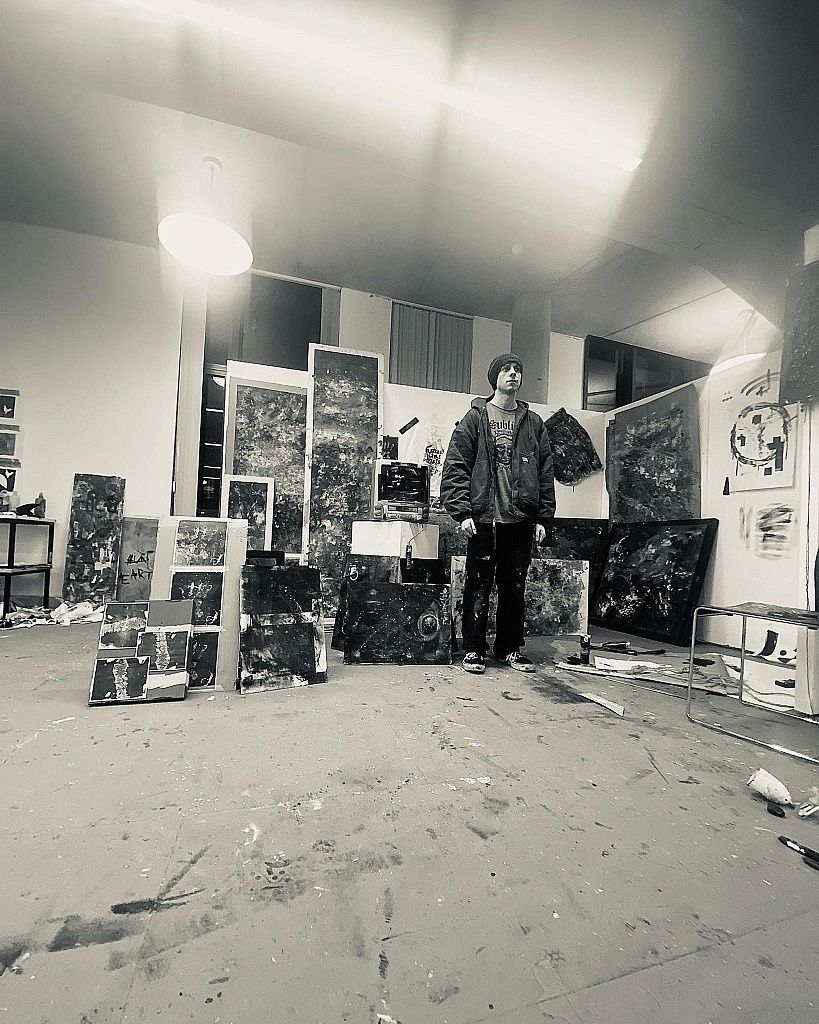
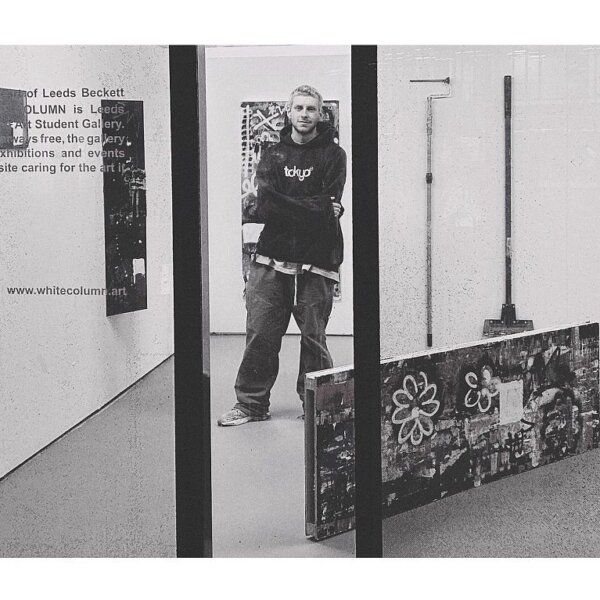
Harry Lamb's art

Artist: Harry Lamb
Status: Available
Prints: Available as prints and cards
Price: £5
How to buy: Buy on Yorkshire Art

I’m 23 years old, and I have been creating art since I can remember. The reason I chose to pursue this particular career was to expand on my knowledge and capacity for the process of artmaking, its nature of change, and to use different resources to influence my own. I aspire to be an active practitioner in the arts, to create no matter what, and to exercise my entrepreneurial spirit. My work, currently residing in the medium of street art, often dismissed as mere vandalism, plays a crucial role in contemporary society by serving as a powerful medium for self-expression and social commentary. My work has revolved around the ever-expanding world of street and political art, where I have devoted considerable time to researching the intricate relationships among culture, individual identity, and the environment one resides in. Through this exploration, I have found that street art possesses an authenticity that is often lacking in more traditional forms of artistic expression. This genuineness stems from its unfiltered nature; artists utilize public spaces to voice their perspectives without the constraints imposed by galleries or institutions. The significance of street art lies not only in its aesthetic appeal but also in its ability to foster dialogue on pressing social issues. By placing their work directly within urban landscapes, street artists engage with diverse audiences who may not typically interact with conventional forms of art.
The interplay between space and audience interaction has always intrigued me, particularly in the context of street art and its potential to transcend traditional boundaries. In an era where urban environments are often characterized by sterile architecture and monotonous design, fostering a gritty, external aesthetic is not merely desirable; it is essential. This necessity stems from the belief that street art can serve as a catalyst for cultural dialogue, enhancing our surroundings while simultaneously challenging societal norms. By promoting the integration of street art into institutionalized environments, we can elevate its status beyond mere vandalism or eyesores to recognized forms of artistic expression. Street art exists at the intersection of public space and personal experience. Its inherent nature invites interaction; it engages passersby in a conversation about social issues, identity, and community dynamics. When displayed in institutional settings, such as galleries, schools, or public institutions, street art retains its raw authenticity while gaining legitimacy within the broader artistic canon.
In contemporary discourse surrounding race and nationalism, the intersection of racial identity and toxic patriotism emerges as a pressing concern. My work seeks to engage with this dynamic through the lens of both the American and British flag, a potent symbol of national pride that simultaneously evokes histories of exclusion and violence. By dismantling and reassembling the flags in an unorderly yet precise manner, I aim to protest the prevailing narratives that uphold a singular vision of American and British identity, questioning how these narratives contribute to societal divisions while reflecting on their implications within our current political climate. Both flags serve as a powerful emblem within the context of toxic patriotism, which often manifests as an unwavering allegiance to national symbols at the expense of marginalized voices. Toxic patriotism can be characterized by a rigid adherence to ideals that overlook systemic injustices, particularly in relation to race. In my artistic practice, I juxtapose this notion by deconstructing the flag, symbolically stripping it down to its constituent parts.
Click to enlarge.