Julia Brown
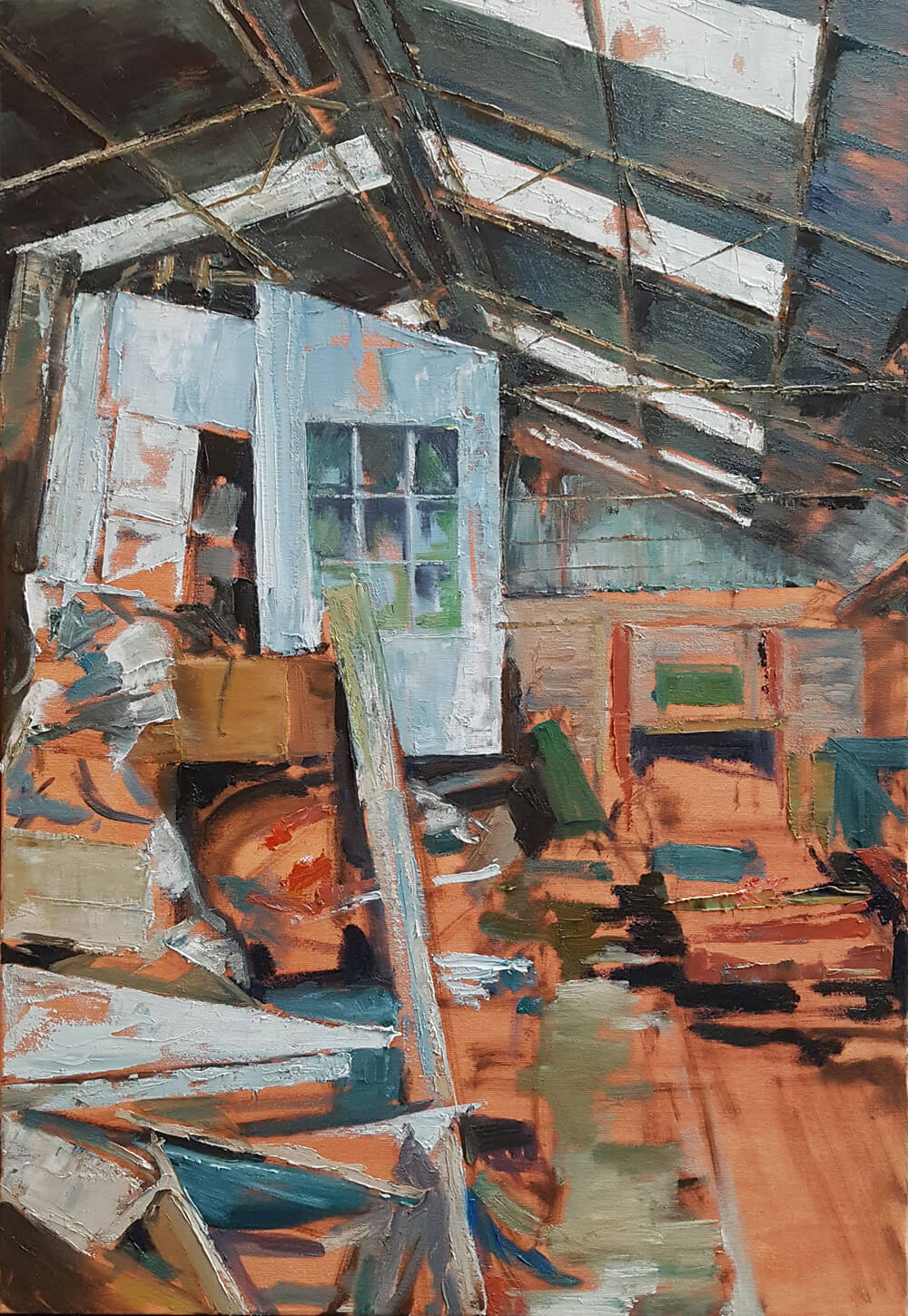
Title: Carapace, 2020
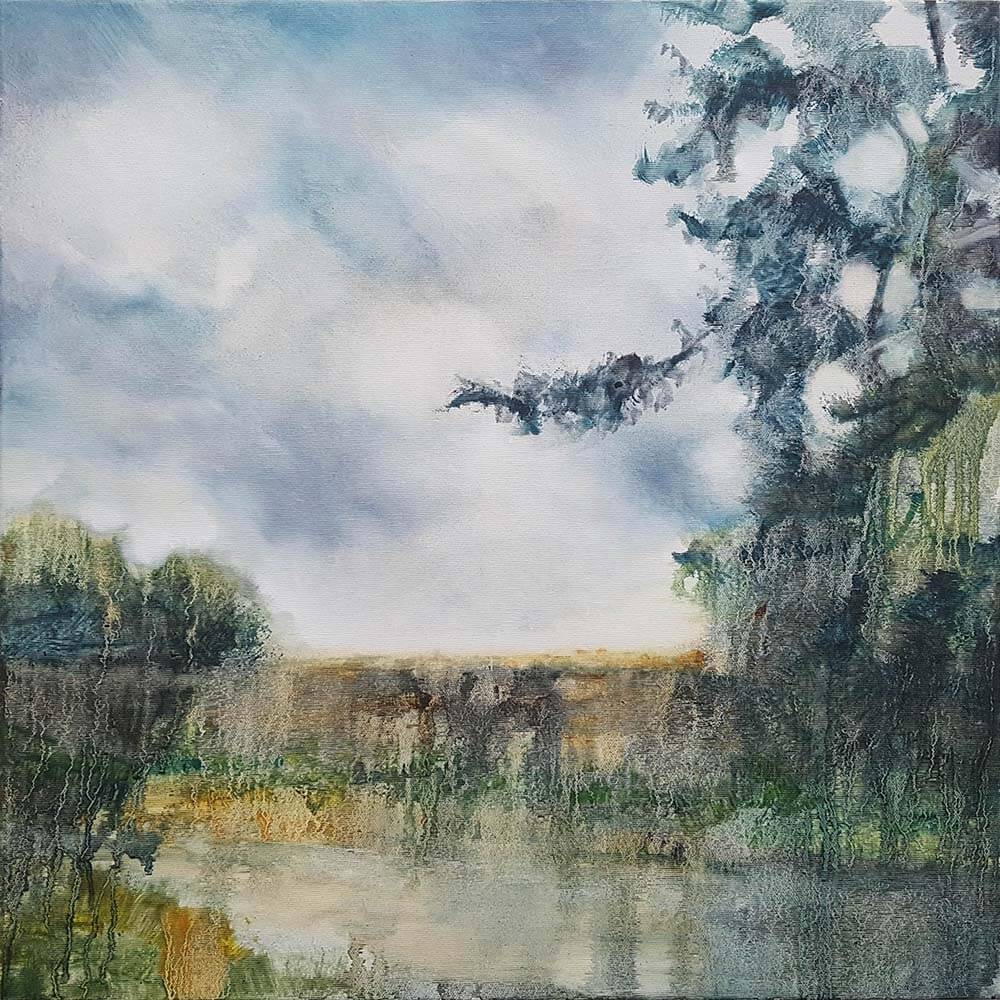
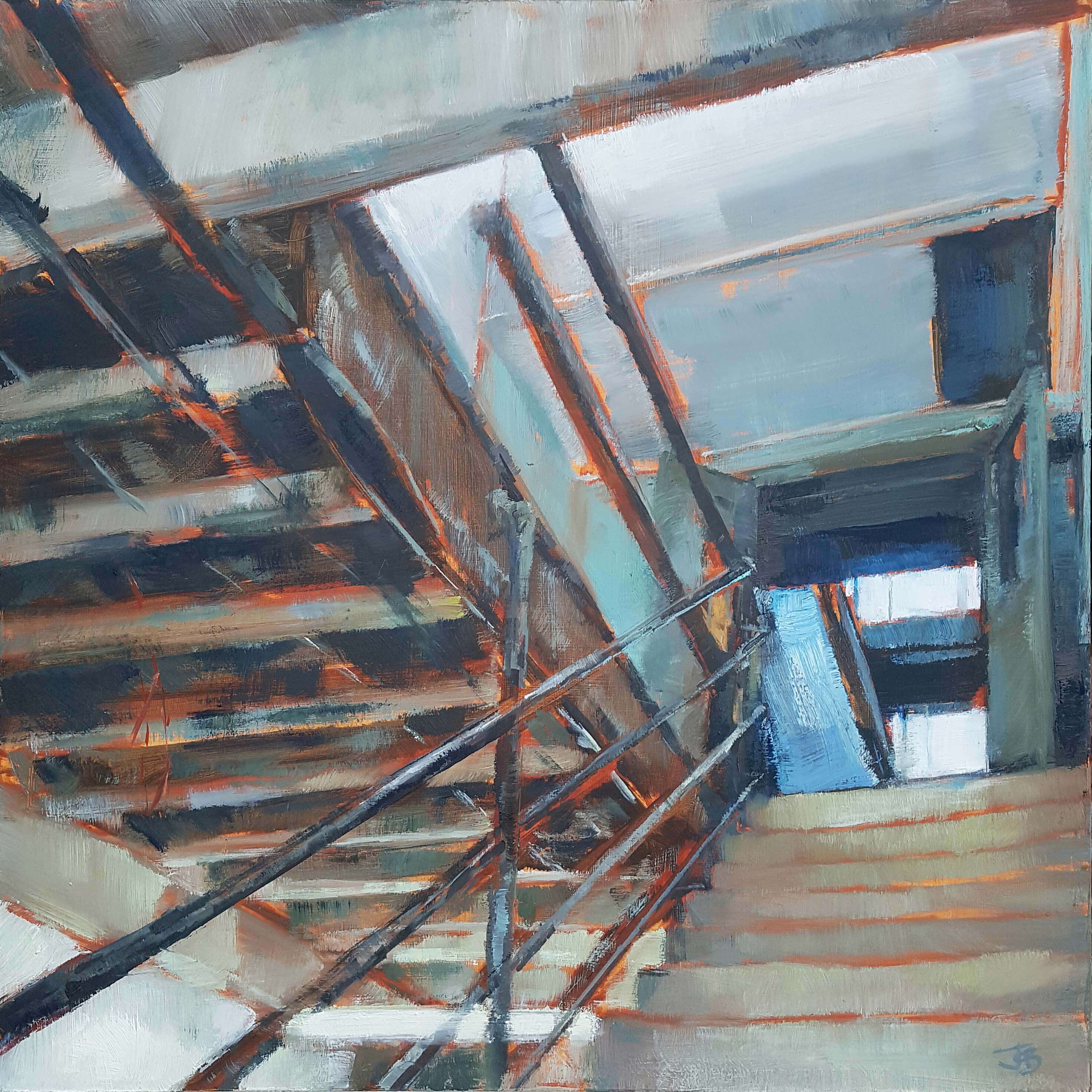
My current work explores spaces, landscapes and structures—man-made or organic, and the interplay of one against and within the other. This one is inspired by the old Union Mills complex in Milnsbridge near Huddersfield.
How man has stamped his boots on the earth, built monumental engineering and architecture, created environments, and populated landscapes, later discarding those creations and moving on when use has been fulfilled. The story of those left-behind places is frequently an interesting one—whether it’s a story of decay and return to the earth, or one of life breathed back and a renewed purpose given.
The paintings evolve quickly from thin, layered washes of oil paint on primed canvas, allowing the pigments, solvent and gravity to help with the mixing process on the surface of the work. Making decisions about whether to intervene is key. I let passages of moving paint remain, or wipe other areas off with rags, angling the canvas so the runs move or halt—letting them do their thing.
As these layers start to settle and dry, I go in with more intense paint, dribble pure solvent over them to break up a mass, or ‘draw’ lines to create angular contrast with the more organic flow of the washed areas.
I want the shapes I describe to be something both intangible yet instantly recognisable—solid objects, the space in between them, or an atmosphere created by light, shade and colour.
Status: Available
Prints: Not available
Kind: Painting
Size of artwork: 61cm x 91.4cm x 3.8cm
Style: Abstract, Contemporary, Landscape
Media: Oil
Surface: Canvas
Where to buy: Ask the artist
£1350
Make enquiry with the artist
Title: Carapace, 2020
My current work explores spaces, landscapes and structures—man-made or organic, and the interplay of one against and within the other. This one is inspired by the old Union Mills complex in Milnsbridge near Huddersfield.
How man has stamped his boots on the earth, built monumental engineering and architecture, created environments, and populated landscapes, later discarding those creations and moving on when use has been fulfilled. The story of those left-behind places is frequently an interesting one—whether it’s a story of decay and return to the earth, or one of life breathed back and a renewed purpose given.
The paintings evolve quickly from thin, layered washes of oil paint on primed canvas, allowing the pigments, solvent and gravity to help with the mixing process on the surface of the work. Making decisions about whether to intervene is key. I let passages of moving paint remain, or wipe other areas off with rags, angling the canvas so the runs move or halt—letting them do their thing.
As these layers start to settle and dry, I go in with more intense paint, dribble pure solvent over them to break up a mass, or ‘draw’ lines to create angular contrast with the more organic flow of the washed areas.
I want the shapes I describe to be something both intangible yet instantly recognisable—solid objects, the space in between them, or an atmosphere created by light, shade and colour.